 Acorn barnacles
 Reproduction
The topic of Acorn barnacles: Reproduction is covered in 8 sub-sections:
- EGG RELEASE, FERTILISATION, & LARVAL DEVELOPMENT
- ECOLOGY OF LARVAE
- SETTLEMENT CUES
- SUBSTRATUM SELECTION
- ATTACHMENT DURING & AFTER SETTLEMENT
- METAMORPHOSIS
- SETTLEMENT RESPONSE TO OCEANIC PROCESSES
- TERMINAL COMMUNITY STRUCTURE POST-RECRUITMENT
Research Study 1


Barnacles are hermaphroditic and one individual usually cross-fertilises with another individual. The penis in a barnacle is extensible, highly maneuvreable, and can extend several body diameters (Fig. 1). If one individual is out of penis-reach of another then it may be reproductively sterile, as self-fertilisation is found in only a few
FOR MORE INFORMATION ON REPRODUCTION IN BARNACLES, SELECT A TOPIC FROM THE MENU.
Research Study 2
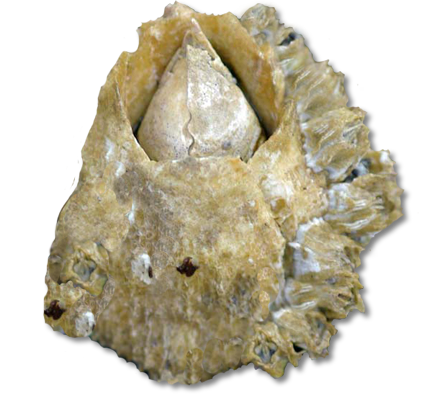
Genetic studies on the two chthamalid species Chthamalus dalli (Fig. 1) and C. fissus confirm the extent of overlap of their distributions and indicate that, rather than a clinal decrease in abundance at the limits of the species’ distributions, their population abundances decline abruptly. An analysis of molecular variance indicates no significant regional population genetic structure in C. dalli. The authors suggest that more work needs to be done on the population biology of the two species in the overlap zone of their distributions.