Isopods
Terrestrialisation: Adaptations In Feeding & Digestion

Research Study 1

While the role of bacterial and other gut symbionts in providing nutritional supplements to their hosts is well known in vertebrates, it is less well-known in invertebrates. A comparison of numbers of microbial symbionts in the midgut glands (hepatopancreatic ceca) of three west-coast isopods at the Bamfield Marine Sciences Centre, British Columbia shows differences possibly associated with evolution to terrestrial life. The three isopods examined are Idotea wosnesenskii, an intertidal species that grazes the surfaces of various macroalgae such as Fucus for food (Fig. 1), Gnorimosphaeroma oregonense, also an intertidal species that favours under-rock habitats and subsists on plant material (Fig. 2), and Ligia pallasii, a supratidal form that feeds on algae in the high intertidal region or more commonly in the strand line of the shore (Fig. 3).  Microbial counts in homogenised hepatopancreatic glands show an apparent absence of symbionts in the two intertidal species, and a presence of symbionts in the semiterrestrial species Ligia.  Comparison of C:N ratios in algal foods and in feces of isopods eating those foods shows differential digestion of nutritional components, most notably phenolics and proteins, by the three species.  Overall, the more terrestrial species L. pallasii appears to utilise food nitrogen more effectively than the intertidal species. The authors suggest that the acquisition of digestion-enhancing symbionts in this prototypal land-colonising species may have been an important component to later colonisation of land. 

NOTE although present in Ligia, numbers are low: only 3 million total in the hepatopancreatic lobes of an adult animal

Fig. 1. Idotea wosnesenkii feeding on kelp
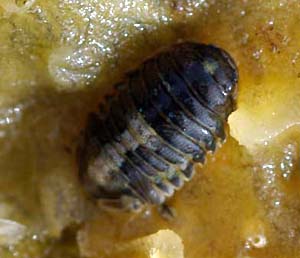
Fig. 2.  Gnorimosphaeroma oregonense on a sponge
Fig. 3.  Large male Ligia pallasii crawling on kelp
Zimmer et al.   2001   Mar Biol 138: 955

Research Study 2

A prerequisite to successful colonisation of land by isopod crustaceans must have been the evolution of an ability to digest cellulose and lignins, both common components of the leaf-litter food of contemporary terrestrial isopods.  A related study by the same research group as in the foregoing Resarch Study at the Bamfield Marine Sciences Centre investigates this ability in two intertidal species Idotea wosnesenskii and Gnorimosphaeroma oregonense, and in the semiterrestrial species Ligia pallasii.  Phenolics are readily oxidised by Gnorimosphaeroma and Ligia, but not by Idotea wosnesenskii, even though this species feeds on seaweeds rich in phenolics.  Similarly, Idotea is least able to digest cellulose, while Ligia is most capable of doing this.  Reduction of gut bacteria by antibiotics treatment significantly reduces cellulose digestion in Ligia, suggesting that endosymbiotic bacteria are likely involved in this activity.  These and other data lend support to the hypothesis that a cellulose-digesting ability was an important “pre-adaptation” to adoption of a fully terrestrial life in isopods. 

NOTE details on types and method of administration of antibiotics can be found in the authors’ previous publication (Research Study 1 above). Possible toxic effects of antibiotics on the isopods is not discussed by the researchers, but they do note that feeding rates are not significantly affected in individuals receiving antibiotics

Zimmer et al.   2002   Mar Biol 140: 1207

Research Study 3

Fig. 2.  Collecting sites for Ligia occidentalis and L. pallasii.  Recent observations place the northern limits of distribution of Ligia occidentalis several hundred kilometers further north than indicated by the tan-coloured dots; in fact, at about the northern-most edge of the larger map shown here (see faint line, also Fig. 2)
Fig. 1.  North to Alaska...Ligia occidentalis, a fast-runnning species: note its orange "feet"

Information on the pattern of distribution of hepatopancreas-inhabiting microbial symbionts in two species of west-coast ligiids is provided by a researcher at the University of California, Davis . Collections of Ligia pallasii and L. occidentalis  (Fig. 1) from 20 west-coast sites ranging from southern Vancouver Island to northern Baja California are used to create 16S rRNA clone-libraries of microbial symbionts   (Fig. 2).  Results show microbial presence in both species, with greater diversity in L. pallasii than in L. occidentalis.  Unfortunately, the technique provides information only on presence or absence of certain bacterial types, and not on their numbers, and no attempt is made to associate a particular bacterial flora with algal food types presence in one habitat versus another.  With respect to this, some individuals are noted to lack symbionts entirely, which raises questions as to the actual role these bacteria play in their hosts’ nutrition.  Phylogenetic analysis shows, perhaps not surprisingly, that symbionts of these semiterrestrial species tend to cluster together. 

NOTE  this is not meant to be a criticism, as any such attempt would be enormously complex and unlikely to be successful

Eberl et al.   2010   Symbiosis 51: 107