
Fig. 1. Octopuses are harvested for food in many parts of the world. The collection of Enteroctopus dofleini shown here may have been part of past Canadian DFO survey estimates of potential commercial "harvestability" of Enteroctopus dolfleini in British Columbia waters
Predators of octopuses (Fig. 1) on this coast include sea otters, seals, sea lions, minks, dogfish sharks, lingcod, wolf eels, salmon, dolphins, cormorants, and several species of whales. There appear to be no invertebrate predators other than other cephalopods, at least not in shallow coastal areas.
The following reports of predation on west-coast octopuses and squids are arranged taxonomically by predator type, including BIRDS, CRABS & LOBSTERS, FISHES, SEALS & SEA LIONS, and WHALES
Research Study 1

Fig. 1.
Enteroctopus dofleini with two or more truncated arms showing regeneration (indicated by abrupt transition from large to small suckers). The ones in question appear to be anteriorly positioned; hence, possibly more vulnerable to damage. The third Right arm may appear to be truncated, but this arm bears the
hectocotylus, with special construction used in sperm transfer
Courtesy California Academy of Science

Fig. 2. Museum specimens of Octopus bimaculatus showing normal arms on Left, and a truncated arm on the Right in the process of regeneration (white pointer)
Along the lines of, "well, someone had to do it", two researchers from the University of California, Santa Cruz investigate arm damage in three species of shallow-water octopuses Octopus bimaculatus, O. bimaculoides, and O. rubescens, mostly represented by preserved specimens in museum collections with a few others collected by hand or by seining. Octopus arms are long, soft, and delicate, and are often in continual motion when the animal is not resting. They are involved in catching and manipulating prey, protecting against predators, burrowing, and maintaining dens. Damage to arms is not uncommon. In fact, after observing 21 - 33 individuals of each sex of the three species, the researchers discover an overall mean arm-damage of 60%. Values for sex were non-significant across all species. An interesting bilateral difference in extent of damage between left and right arms was found in all species and sexes except O bimaculatus males, with the left and front arms being most affected. Larger individuals of both sexes, correlated with advanced age one expects, exhibited greatest extent of arm damage. Interestingly, no significant differences were found between the sexes nor generally in arm location, the last unexpected given that the front arms do much of the exploring. Other differences were found, but with no obvious explanation for them.
NOTE termed truncation by the authors. The PHD thesis from which this publication was derived is titled, "Armed and dangerous: patterns and drivers of octopus arm loss", likely relating to a poem by Jared Smith: "An octopus went off to battle. A good thing that he was fully armed"
NOTE at first sight this value seems rather high, and one wonders whether arm damage may sometimes lead to the death of an individual, thus contributing disproportionately (60% "of 199 individuals in this museum study") to a museum collection
Voss & Mehta 2021 Zoology 147: 125940
Research Study 1: Birds

Fig. 1. There are lots of photos online of cormorants eating fishes, but none involving west-coast octopuses. Here, the only flightless cormant species known
Phalacrocorax harrisi appears to be attacking, or playing with, an
Octopus briareus in the Galapagos Islands
Courtesy Galapagos Insiders
Examination of regurgitated “morning pellets” by adults and chicks, and reference to literature data on stomach content of three species of pelagic cormorants in localities ranging from Alaska to Baja California, discloses only a small dietary reliance on cephalopods (Fig. 1). For example, less than 1% of 9519 prey items from cormorants in the Farallon Islands, California are cephalopods, likely a mixture of Octopus rubescens and Doryteuthis (Loligo) opalescens.
Ainley et al. 1981 The Condor 83: 120
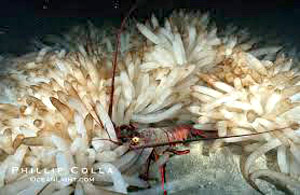
Lobster
Panulirus interruptus possibly preying on eggs of squids
Doryteuthis opalescens near La Jolla, CA
Courtesy Phillip Colla CA oceanlight.com
Research Study 1: Fishes

Fig. 1. Schematic showing fish and other vertebrates that consume squids Doryteuthis opalescens and vice versa (anchovies and krill) in California waters
Researchers at the Moss Landing Marine Laboratories, California present results of a large-scale examination of stomach contents of potential fish, seabird, and marine-mammal predators of squids Doryteuthis opalescens in Monterey Bay, California. So many of the species examined, especially fishes, consume Doryteuthis that it would be difficult to rank their importance as predators, but the conclusion of the authors is that, although seasonal in occurrence, squids represent an important component of local food webs (Fig. 1).
NOTE involving examination of stomach and intestinal contents of 1,928 fishes (86 species), 513 seabirds (28 species), and 143 marine mammals (9 - 15 species)
NOTE Doryteuthis is known to be eaten by 19 species of fishes, many of economic importance
Morejohn et al. 1978 In, Biological, oceanographic, and acoustic aspects of the market squid, Doryteuthis (Loligo) opalescens Berry 185pp. State of California, Dept Fish Game, Fish Bull 169.
Research Study 2: Fishes
Examination of stomach contents of 308 chinook salmon Oncorhynhcus tshawytscha from three sites in northern California sampled during May - Sept shows that 8% of prey mass is made up of squids Doryteuthis opalescens, along with trace amounts of Octopus rubescens.
Hunt et al. 1999 Fish Bull 97: 717
Research Study 3: Fishes
The main predators of the 2-spotted octopuses Octopus bimaculoides in Catalina Island, California are cabezon, sculpins, moray eels, and marine mammals such as seals and sea lions. In one set of collections octopus prey are found to make up 70% of the gut contents of cabezon Scorpaenichthys marmoratus and sculpins Scorpaena guttata.
Ambrose 1988 Malacologia 29: 23
Research Study 1: Leeches

Fig. 1. A parasitic leech Stibarobdella moorei on Octopus bimaculatus. The inset photo shows the two suckered ends of the parasite, the caudal one used for holding on
Leeches suck the blood of their hosts, but of course are not predators. Still, a report of infestation of two-spot octopuses Octopus bimaculatus in the Gulf of California with leeches Stibarobdella moorei (Fig. 1) is of interest, if only for the high incidence of infection and for its occurrence ectoparasitically on octopuses at all. The species S. moorei is more commonly known as a parasite of sharks and rays, and its presence on octopuses of any kind is apparently a first record. The extent of infestation of a population of octopuses in Bahia de los Angeles is impressive, with 92% of 61 individuals being infested, with a mean of 13 leeches being found on each. No information is available on the biology of the parasite, especially whether they find the thin, blue hemolymph of the mollusc to be a satisfactory alternative to rich vertebrate blood. The authors do not comment on whether any of the parasites appear well-fed or were interrupted in their feeding; certainly, the ones photographed by the authors seem thin enough to suggest that perhaps their presence on the octopuses is only temporary.
NOTE should your octopus O. bimaculatus be suffering from an infestation of leeches Stibarobdella moorei, the same research group offers a handy suggestion for their removal. Just dip the afflicted octopus in a solution of 0.45ml per liter seawater of clove oil for 2min and stand ready with your collecting net (Lopez-Peraza et al., 2018)
Lopez-Peraza et al. 2017 Helminthologia 54 (4): 322
Lopez-Peraza et al. 2018 Amer Malacol Bull 36 (1): 119
Research Study 1: Seals & sea lions

Fig. 1. Seals Phoca vitulina basking in the Deer Group of islands near Bamfield, B.C.
An early assessment of diets of harbour seals Phoca richardii (Fig. 1) by researchers from the US Biological Survey, Washington, DC reveals that individuals in Puget Sound, Washington subsist mainly on fishes (94% by volume), with octopuses (Polypus hongkongensis) and squids comprising most of the remainder (6%).
NOTE the current designation for the harbour seal is Phoca vitulina (Linneaus 1758). There are several subspecies, one of which is Phoca vitulina richardii
NOTE 20% of the 100 stomachs sampled are empty or near empty. Octopuses are found in four of 23 stomachs sampled in July, one individual with four octopuses; the other, one octopus plus beaks of 31 others. Other non-fish prey eaten, but representing only a trace of total diets of the seals, are shrimps, crabs, a snail, and a clam. The designation Polypus hongkongensis is an older synonym used in the past for both species of octopus occuring in Puget Sound: the smaller red octopus Octopus rubescens and the giant Pacific octopus Enteroctopus dolfleini. A single deep-water species Octopus hongkongensis is now recognised
Scheffer & Sperry 1931 J Mammalogy 12 (3): 214
Research Study 2: Seals & sea lions
Analyses of stomach contents of 250 Steller sea lions Eumetopias jubatus in the Gulf of Alaska indicate the presence of 4% by volume cephalopod prey (mainly octopuses and squids). The author uses the presence of beaks to estimate numbers of cephalopod prey, and the volume of identifiable cephalopod matter in relation to volume of all stomach contents, to obtain the % volume represented. However, owing to the ease of digestibility of cephalopods (scarcity of hard parts), this latter is likely to be a gross underestimate, at best. In the case of cephalopods a better substitute for such visual estimations would have been to employ a similar technique to that used in other studies; that is, measure beak dimensions and relate to live mass.
Pitcher 1981 Fish Bull 79: 467
Research Study 3: Seals & sea lions
A recent survey of diets of harbour seals Phoca vitulina in Puget Sound lists the frequency of occurrence of cephalopods as 6 - 12% in scats collected. Cephalopods listed as being eaten include mainly the Pacific red octopus Octopus rubescens, the armhook squid Berryteuthis magister, the market squid Doryteuthis opalescens, and traces of other squids. The absence of traces of giant octopuses Enteroctopus dofleini in scats in this study is contrary to the 1931 survey and suggests that there may have been misidentification in one or both of the studies.
NOTE the original species name given by Linneaus in 1758
NOTE the researchers analyse 1723 scat samples collected at 23 haul-out areas throughout the San Juan Islands and neighbouring areas of Puget Sound
Lance et al. 2012 Mar Ecol Prog Ser 464: 257
Research Study 4: Seals & sea lions
Examination of stomach contents of 22 dead elephant seals Mirounga angustirostris. in rookeries mostly on San Miguel Island, California reveals the beak remains of 12 different cephalopod species, including several smaller squids, one giant squid Onykia (Moroteuthis) robusta, and two different species of octopuses (not identified). For a world review of seal diets see Klages (1996 ).
Condit & Le Boeuf 1984 J Mamm 65: 281
Klages 1996 Phil Trans: Biol Sci 351: 1045
Research Study 5: Seals & sea lions
Spring and summer stomach lavages of 193 elephant seals Mirounga angustirostris at San Miguel Island, California from 1984 - 1990 reveal the remains of numerous deep-water cephalopod species. Most of the 30 or so cephalopod species identified are epi- or meso-benthic. Much less commonly eaten are shallow-water octopuses, including Octopus rubescens (3% frequency of occurrence in the stomachs), Enteroctopus dolfleini (0.5%), and Octopus bimaculatus (0.5).
NOTE direct intervention of this kind can make the seals sick and, in fact, 6 died, possibly through application of an anaesthetic, ketamine hydrochloride. Despite this, such an "intervention" would likely be preferred by the seals over the alternative, sure death, as used in other studies
Antonelis et al. 1994 In, Elephant seals Population ecology, behavior, and physiology (eds. Le Boef & Laws) University of California Press, Berkeley
Research Study 6: Seals & sea lions
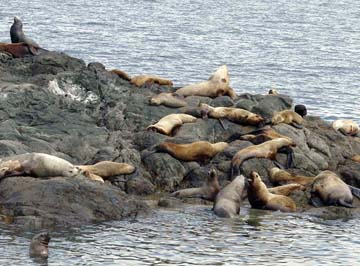
Fig. 1. Steller sea lions Eumetopias jubatus at Cortez Island, British Columbia
Analysis of many hundreds of scats (feces) of Steller sea lions Eumetopias jubatus (Fig. 1) collected from haulouts and rookeries in southeast Alaska during 1993 - 1999 disclose remnants of squids and octopuses (species not identified) representing between 2 - 20% occurrence frequency in the diet.
Trites et al. 2007 Fish Bull 105: 234
Research Study 7: Seals & sea lions
The photographs below taken at Ogden Point, Victoria, British Columbia in February, 2015 show a harbour seal Phoca vitulina fighting with and eventually killing an octopus Enteroctopus dolfleini that the seal brought to the surface. The entire episode lasts for only a few minutes...and it seems to have been a one-sided fight. Did the seal not eat any of its "catch"? Other observations of harbour seals Phoca vitulina preying on giant octopuses Enteroctopus dolfleini in the Gulf Islands, Washington are presented by researchers at Pacific Mammal Research, Anacortes, WA (Edison et al., 2024).

Courtesy Bob Ianson, Victoria (all photos)
Edison et al. 2024 Oceans 5: 368
Ianson 2023 Victoria Times
Research Study 1: Whales
Stomach-content analyses of 50 sperm whales Physeter macrocephalus captured by whaling vessels off the coast of Vancouver Island, British Columbia during 1948 - 49 (B.C. Packers Whaling Station, Quatsino Sound) reveals the presence of squids in about 70% of the stomachs. Two species of squids are listed: the large Onykia robusta (2.5m total length, tentacle tips to mantle tip) and the smaller Gonatus fabricii (max. 0.5m total length).
Pike 1950 Progr Rep Fish Res Bd Canada No. 83: 27
Research Study 2: Whales

Fig. 1. Sperm whale Physeter macrocephalus
Analyses of stomach contents of 552 sperm whales Physeter macrocephalus (Fig. 1) harvested at the Del Monte and Golden Gate Whaling Stations, California between 1959 - 1970 reveal 12 containing beaks of giant squids Architeuthis spp. These particular whales were harvested over the continental slope, but there are many reports of Architeuthis beaks in sperm whales in temperate western zones of the Pacific Ocean. Most of the beaks are dorsal ones, but a matched pair is shown in a photograph in the article.
Fiscus & Rice 1974 Calif Fish Game 60: 91
Research Study 3: Whales
Stomach contents of 20 sperm whales Physeter macrocephalus caught in the region west of Vancouver Island, British Columbia and processed at the Coal Harbour whaling station in northern Vancouver Island yield several hundred cephalopod beaks, of which 152 are sorted and measured. Thirteen species of cephalopods are identified, of which the giant squid Onykia robusta is found to represent 24% of the total beak number, equivalent fo 62% of the mass of flesh represented by the beaks. Beaks of a smaller squid Berryteuthis magister represent 29% of beak number, equivalent to 18% of total cephalopod flesh consumed by the whales.
Clarke & MacLeod 1980 Mar Biol 59: 241
Research Study 4: Whales
Examination of stomach contents of 157 sperm whales Physeter macrocephalus taken in shore-based commercial harvesting off the coast of California during 1959-1970 reveals the presence of 24 species of cephalopods (based on identification of 2060 beaks representing 1700 individual cephalopods). The most commonly occurring cephalopod prey on the basis of frequency of occurrence in the stomachs is the giant squid Onykia robusta (72%), followed by giant squids Architeuthis spp. (7%), giant octopus Enteroctopus dolfleini (7%), commercial squids Doryteuthis opalescens (< 1%), and Humboldt squids Dosidicus gigas (2%).
Fiscus et al. 1989 NOAA Tech Rep NMFS 83: 1-18
Research Study 5: Whales
A more recent and complete analysis of commercial whaling records from the Coal Harbour whaling station in northern Vancouver Island, British Columbia provide dietary information for 779 sperm whales killed during the period 1963 - 1967. Giant squids Onykia robusta are the dominant prey for both sexes of whales, along with somewhat lesser amounts of fishes (mostly ragfish and rockfish, but also including dogfish, lamprey, skate, and hake) and a few other squids.
Flinn et al. 2002 Mar Mammal Sci 18: 663
Research Study 6: Whales
A consortium of researchers from Baja California and southern California uses measurements of stable-isotope ratios to determine trophic relationships between sperm whales Physeter macrocephalus and Humboldt squids Dosidicus gigas (data from a whaling station). Results show that female and immature male whales feed on squids in the Gulf of California, while adult males do not. The method is non-invasive in that sloughed skin samples of free-ranging whales are all that are needed for analysis, rather than the more commonly used stomach-content or fecal-sample analyses.
NOTE the method compares ratios of carbon and nitrogen isotopes (Delta13C and Delta15N) in skin of whales and muscle of squids to determine trophic relationship. Significantly high values of +1.1% and +2.7% in female and immature whales, respectively, suggest a predator-prey relationship
NOTE the station operated from 1943 - 1967. The International Whaling Commission required that a biologist be assigned to the station to collect various types of biological data, including stomach-content analyses. The data analysed by the authors cited here also include fin whales (Balaenoptera physalus) and sei whales (Balaenoptera borealis) but, as only traces of cephalopod remains are recorded for fin whales and none for sei whales, diets of these whales are not considered here
Ruiz-Cooley et al. 2004 Mar Ecol Progr Ser 277: 275
 Octopuses & relatives

